Top 10 Marriage Problems and Solutions
 By the Balkanza team
·
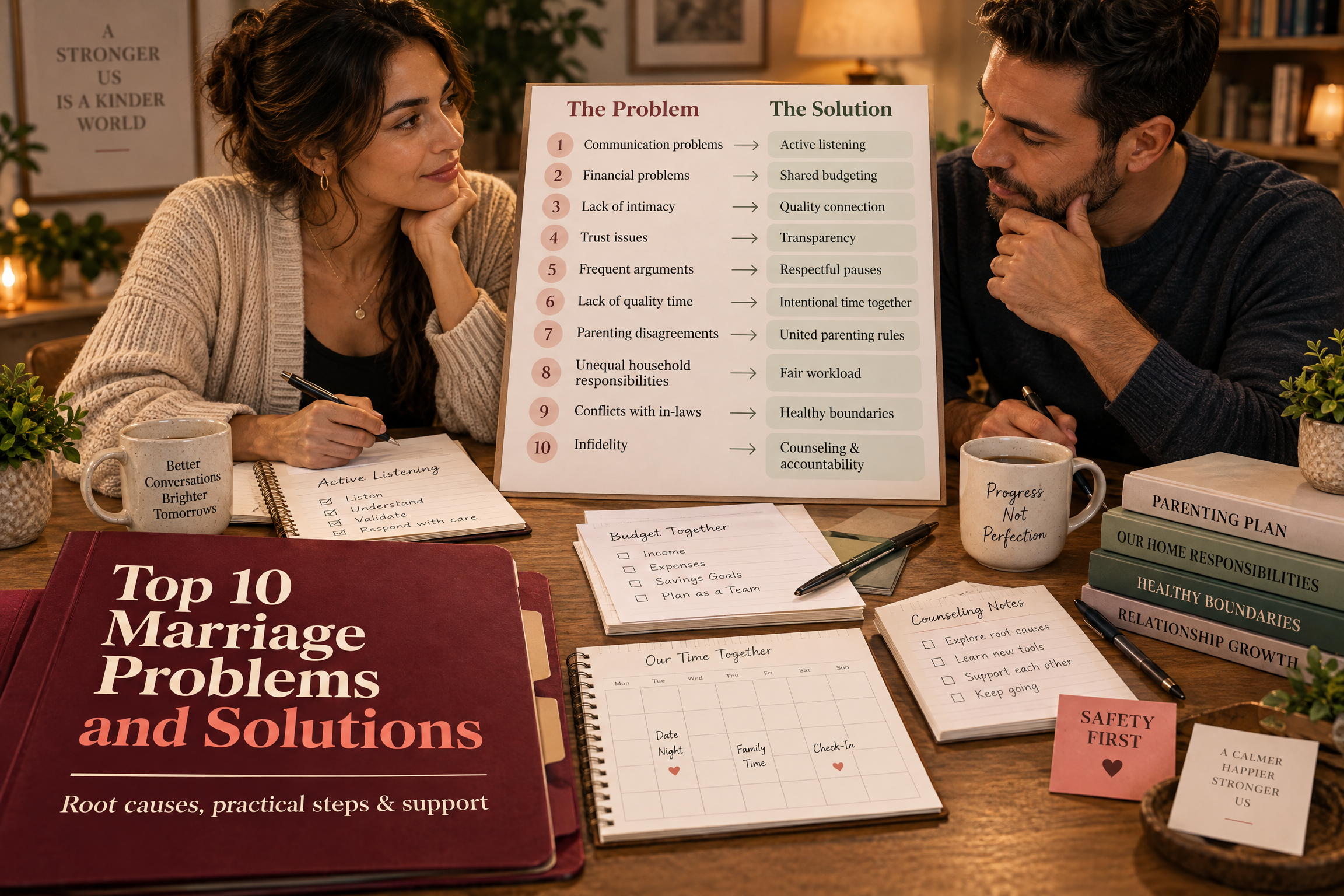
Marriage problems develop when communication, money, trust, or daily responsibilities strain the bond that spouses share. Marriage problems respond to practical solutions, and spouses who apply them protect a partnership built on love and shared commitment. Marriage gives partners emotional companionship, financial cooperation, and a stable home for raising children. The Gottman Institute, founded by psychologists John and Julie Gottman, links lasting marriages to friendship, respect, and constructive conflict habits. A marriage works when spouses listen carefully, share responsibilities, and repair disagreements promptly.
The American Psychological Association describes couples therapy as a structured method for addressing persistent conflict and communication problems. Ten common problems and practical solutions are covered below, from communication breakdowns and financial stress to infidelity. A trial separation becomes a reasonable option when ongoing conflict, emotional distance, or unresolved problems make living together difficult. Separation requires clear agreements about finances, parenting, living arrangements, and boundaries before partners proceed. Safety takes priority when abuse or immediate danger is present, and local emergency services provide urgent help. Counseling from a licensed therapist offers early support before recurring problems become entrenched. Practical steps in each section address the root cause of the problem instead of the symptoms.
1. Communication Problems
Communication problems arise when spouses avoid difficult topics, interrupt each other, or assume instead of asking. Unspoken concerns grow into repeated misunderstandings and quiet resentment. The Gottman Institute calls criticism, contempt, defensiveness, and stonewalling harmful habits. Practicing active listening and open communication replaces harmful habits with understanding. Partners maintain eye contact, summarize what was heard, and ask clarifying questions before responding. Each spouse states needs through specific requests instead of blame. Weekly conversations about feelings, schedules, and goals prevent small concerns from growing. Reflective listening lowers defensiveness during disagreements and builds emotional safety. Couples practice the skills daily, during ordinary conversations and during conflict. Patience helps new habits last.
2. Financial Problems
Financial problems arise when spouses disagree about spending, saving, debt, or income. Hidden purchases and unequal control over accounts weaken trust. Creating a budget and setting shared financial goals brings clarity. The Consumer Financial Protection Bureau publishes budgeting worksheets that help households track income and expenses. Partners list income, debts, and recurring expenses, then assign amounts to savings and personal spending. Each spouse keeps a small personal allowance that requires no explanation. Monthly reviews keep the plan realistic when prices or income change. Shared goals (an emergency fund, a home deposit, retirement savings) give each decision a purpose. Open conversations about debt remove secrecy and shame. Financial advisors offer neutral guidance.
3. Lack of Intimacy
Lack of intimacy develops when stress, fatigue, or emotional distance reduces physical and emotional connection. Partners begin to feel rejected, unwanted, or ignored. Prioritizing emotional and physical intimacy restores closeness. Daily affection (hugs, kind messages, shared routines) builds comfort and trust. Honest conversations about desire and boundaries remove pressure and assumptions. Partners ask what feels connecting instead of guessing. Emotional closeness comes first, since conversation and appreciation create safety for physical affection. Stress from work or parenting changes desire, and patience prevents hurt feelings. Date nights and phone free evenings protect time for connection. A licensed sex therapist or couples counselor addresses persistent concerns. Professional guidance clarifies underlying emotional causes.
4. Trust Issues
Trust issues surface after lies, secrecy, broken promises, or unresolved betrayal. Suspicion then replaces emotional safety. Being honest and consistent rebuilds trust. Partners keep commitments, share information openly, and admit mistakes promptly. Repeated reliable behavior restores confidence, whereas apologies without change do not. Transparency about schedules, messages, and spending reduces doubt during recovery. The injured spouse sets the pace, and the other spouse answers questions patiently. Small promises kept daily rebuild trust faster than grand gestures. Psychologist John Gottman describes trust as built through small moments of attention and reliability. Accountability outweighs perfection, so honest admission of a slip strengthens credibility. Counseling provides structure when suspicion persists. Patience supports the process.
5. Frequent Arguments
Frequent arguments occur when disagreements repeat without resolution. Raised voices, sarcasm, and personal attacks damage respect. Staying calm and resolving conflicts respectfully breaks the cycle. The Gottman Institute recommends a break of at least 20 minutes when emotions run high. Partners use the break to breathe, walk, or relax, not to rehearse arguments. Partners then return and discuss one issue using specific examples. Statements about feelings (feeling ignored when plans change) express needs without blame. Each spouse summarizes the other’s point before responding. Agreements about ground rules (no name calling, no interruptions, no threats) protect dignity. Counseling helps couples stuck in the same argument. Practice builds the habit.
6. Lack of Quality Time
Lack of quality time develops when work, children, and screens fill the schedule. Spouses begin to live parallel lives. Scheduling regular quality time together protects the connection. A weekly dinner, an evening walk, or a phone free hour gives partners undivided attention. Putting the time on a shared calendar makes the time a commitment instead of a leftover. Couples (parents of young children, shift workers) adjust the format to fit the schedule. A 15 minute conversation after work keeps partners informed about each other’s day. Shared hobbies (cooking, gardening, hiking) create new memories and common interests. Phones stay away during the time to protect attention. Consistent moments rebuild friendship.
7. Parenting Disagreements
Parenting disagreements arise from different upbringings, discipline styles, and expectations about school, screen time, and chores. Inconsistent rules confuse children and create tension at home. Discussing parenting styles and agreeing on shared rules gives children a united structure. Partners talk privately before correcting a child, so the child sees cooperation instead of conflict. Written household rules (bedtimes, homework, screen limits) reduce daily negotiation. Each parent explains the reason behind a preference, and the couple selects a compromise. The American Academy of Pediatrics publishes parenting guidance that helps couples compare approaches. A family counselor or pediatrician offers neutral guidance on difficult decisions. Regular family meetings keep rules current when children grow.
8. Unequal Household Responsibilities
Unequal household responsibilities lead to exhaustion and resentment when one spouse carries the cleaning, cooking, childcare, or planning. Invisible mental labor (remembering appointments, buying gifts, tracking supplies) adds to the imbalance. Dividing household responsibilities fairly restores teamwork. Partners list each task, including appointments and school forms, and divide the list by schedule and ability. Fairness does not require identical workloads, yet each spouse needs to feel the split is reasonable. Rotating unpopular chores prevents one partner from carrying the same burden. Monthly reviews keep the split fair when work and family needs change. Appreciation for invisible tasks reduces resentment. Hiring help or simplifying routines (meal planning, grocery delivery) lowers the load.
9. Conflicts with In Laws
Conflicts with in laws arise from boundary violations, competing loyalties, and differing family traditions. Spouses feel caught when relatives criticize decisions about money, parenting, or holidays. Establishing healthy boundaries with in laws protects the marriage. Spouses address family concerns with their own relatives, and partners present united decisions politely. Visits, advice, and holiday plans receive clear limits agreed in advance. A united front shows relatives that the marriage comes first. Respect for family traditions (shared holidays, cultural customs) softens tension. Kind but firm replies end repeated pressure without insulting relatives. Thoughtful gestures toward in laws (phone calls, invitations) build goodwill. Family therapists guide couples through persistent conflicts. Patience supports relationships with relatives.
10. Infidelity
Infidelity includes physical affairs, emotional affairs, and online secrecy that violate agreed commitments. Betrayal causes shock, anger, and deep loss of trust. Seeking couples counseling and rebuilding trust after infidelity require accountability from the partner who broke trust. Honest answers, ended contact with the affair partner, and consistent transparency form the foundation. Emotionally Focused Therapy, developed by psychologist Sue Johnson, guides couples through emotional recovery after betrayal. The hurt spouse receives time to grieve, ask questions, and express anger respectfully. Shame and defensiveness slow healing, so the partner who strayed practices patience and humility. Couples decide whether to rebuild or separate after the initial shock settles. Personal therapy supports each spouse.
Why is Marriage Important?
Marriage is important since it provides a committed partnership built on love, trust, shared responsibilities, and mutual support. Spouses gain emotional companionship, a reliable confidant, and a partner for major life decisions. Financial cooperation (joint savings, shared housing costs, retirement planning) strengthens household stability. A secure home supports children through consistent care and routines. The Pew Research Center reports that adults rank love, lifelong commitment, and companionship among leading reasons to marry. The value of a marriage depends on how partners treat each other and build the relationship daily. Respect, honest communication, and consistent effort turn a legal bond into emotional security. Benefits follow from effort rather than from marital status. Neglect weakens the same bond that commitment strengthens. Spouses revisit goals, finances, and parenting plans regularly to keep the partnership healthy. Couples that ask why is marriage important find clear answers in shared purpose, daily kindness, and mutual support.
What are the Main Causes of Marriage Problems?
The main causes of marriage problems are listed below.
Poor Communication: Misunderstandings and unresolved concerns weaken connection. Avoided conversations leave expectations unclear.
Different Expectations: Spouses disagree about roles, responsibilities, or future plans. Unspoken assumptions turn small gaps into recurring disputes.
Financial Stress: Money concerns create conflict and insecurity. Debt, job loss, and uneven spending habits increase tension.
Trust Issues: Dishonesty or broken commitments damage emotional safety. Secrecy about money or relationships deepens suspicion.
Limited Quality Time: Busy schedules reduce closeness and connection. Work and parenting demands leave little attention for the relationship.
Unresolved Conflict: Repeated arguments create resentment over time. Avoiding the root issue keeps the same dispute returning.
How can Different Expectations Lead to Marital Issues?
Different expectations lead to marital issues when spouses hold conflicting ideas about responsibilities, affection, finances, or family life. A spouse who expects daily affection feels neglected when the partner shows love through practical help. Unspoken assumptions lead to disappointment and repeated misunderstandings. Expectations formed in each spouse’s family of origin (who cooks, who earns, who decides) rarely match perfectly. Discussing expectations openly reduces conflict and clarifies needs. Partners write expectations about chores, finances, parenting, and time together, then compare the lists. Agreed priorities replace guesswork with shared standards. Therapists affiliated with the American Association for Marriage and Family Therapy guide couples through stubborn expectation gaps. Regular reviews keep agreements current when careers, children, and finances change. Flexibility protects the relationship.
What Makes a Marriage Work?
The factors that make a marriage work include mutual respect, trust, communication, commitment, and cooperation. Respect allows spouses to disagree without contempt or humiliation. Trust grows when words and actions stay consistent over months and years. Open communication keeps expectations clear and prevents silent resentment. Commitment holds the partnership steady during difficult periods. Partners benefit from listening carefully, sharing responsibilities, and resolving disagreements constructively. Psychologist John Gottman calls small daily moments of attention bids for connection and links them to lasting relationships. Turning toward a bid with a response, a smile, or a question builds emotional closeness. Fair division of chores, parenting duties, and financial tasks prevents quiet resentment. Consistent effort from each spouse maintains connection when circumstances change. Appreciation, affection, and shared humor keep friendship alive next to romantic commitment. Couples that ask what makes a marriage work review communication, finances, and affection regularly together.
How do Differences in Personal Values Affect Married Life?
Differences in personal values do affect married life by shaping decisions about money, religion, family, parenting, and lifestyle. A spouse who prioritizes saving and a spouse who prioritizes experiences judge the same purchase differently. Conflicting priorities create tension when neither partner feels understood. Religious practice, holiday traditions, and child rearing choices increase the strain. Respectful discussion and agreed boundaries help couples manage differences without requiring identical beliefs. Partners start by naming the value behind a position (security, freedom, or tradition). Understanding the reason behind a stance reduces defensiveness and opens room for compromise. Couples then agree on practical rules (a shared budget, a holiday rotation, a parenting plan). Pastoral counselors or licensed therapists provide neutral guidance when values clash on major life choices. Mutual respect keeps differences from becoming a verdict on the relationship.
Why do Spouses Struggle to Accept Each Other’s Differences?
Spouses struggle to accept each other’s differences when personal insecurities, family upbringing, cultural expectations, or fear of change shape the response. Insecurity turns a different opinion into perceived rejection. Differences feel threatening when partners mistake them for criticism. Family upbringing sets a default for handling conflict, money, and affection. Cultural expectations about gender roles and family obligations add pressure. Curiosity, empathy, and respectful communication help spouses understand each other without trying to control one another. Open questions about the meaning behind a habit replace judgment with understanding. Partners practice reflecting what was heard before responding. Imago Relationship Therapy, created by Harville Hendrix, teaches couples a structured dialogue that builds empathy for differences. Acceptance grows when differences become complementary strengths instead of flaws.
Can Respecting Individual Beliefs Strengthen a Marriage? Yes, respecting personal beliefs strengthens a marriage. Respect shows that each spouse’s identity remains valued inside the partnership. Partners feel safe sharing faith, opinions, and convictions when disagreement brings no ridicule. Emotional safety encourages honesty, and honesty deepens trust. Couples preserve unity by agreeing on shared decisions and leaving room for private convictions. Curiosity about the reasons behind a belief builds empathy better than debate. Respect does not require agreement, but it does require listening and courtesy. Couples who honor personal convictions keep closeness during disagreements about religion, politics, and parenting. Simple phrases (thank you for explaining) reinforce acceptance. Patience supports progress.
How can Career Choices Put Pressure on a Marriage?
Career choices put pressure on a marriage when work demands conflict with shared responsibilities, time together, or long term plans. Relocation, long hours, travel, and unequal career sacrifices create tension. A spouse who declines a promotion to protect family needs feels unrecognized when the sacrifice goes unacknowledged. Shift work and repeated business trips reduce shared routines and weaken connection. Income gaps shift power and expectations around decisions. Joint decision making and clear discussions about priorities help couples manage career related changes. Partners review job offers together and weigh salary, commute, growth, and family impact. Agreements about whose career leads during a given period prevent resentment. Flexible schedules and remote work arrangements give couples room to coordinate. Career coaches and family counselors offer neutral perspectives on difficult tradeoffs. Recognition of each partner’s sacrifices keeps fairness intact over the long run. Support for a spouse’s growth strengthens loyalty and shared purpose.
Why can Work Demands Create Tension Between Spouses?
Work demands create tension between spouses when long hours reduce time together or leave one spouse carrying greater household or family responsibilities. Deadlines, commuting, and overtime drain energy that partners otherwise reserve for each other. Stress, fatigue, and missed commitments contribute to misunderstandings. A spouse who works late feels pressure, and the spouse at home feels alone. Work stress carried into the evening shortens patience and lowers affection. Agreeing on practical schedules, sharing responsibilities, and protecting quality time reduces pressure. Partners keep a shared calendar showing deadlines, school events, and date nights. A short conversation after work lets each spouse decompress and share the day. Boundaries around phones and email during family time restore attention. Appreciation for the effort behind a demanding job reduces blame.
Can Couples Balance Career Goals With Relationship Needs?
Yes, couples balance career goals with relationship needs through communication and shared planning. Discussing work schedules, career opportunities, finances, and household duties helps each partner feel considered. Couples map priorities for the next year and decide which goals receive attention first. Flexible arrangements (remote days, shared school pickups, alternating travel) protect time together. The balance changes over time, so regular check ins help couples adjust together. A promotion, a new baby, or a health event shifts household needs. Quarterly reviews keep the plan current. Mutual support for career milestones strengthens trust and shared pride. Researchers Rhona and Robert Rapoport studied dual career families and described the pressures of managing two professional paths. Couples counselors help partners negotiate tradeoffs when goals collide.
How do Major Life Changes Affect a Marriage?
Major life changes do affect a marriage by changing routines, responsibilities, finances, and emotional needs. Events (having a child, moving, changing jobs, caring for relatives) increase stress. A newborn reduces sleep, privacy, and couple time. Caring for aging parents adds financial and emotional strain. Spouses respond differently to the same event, which produces misunderstandings. The Holmes and Rahe Social Readjustment Rating Scale ranks life events by the adjustment each requires. Open communication and flexibility help spouses adapt and keep their connection. Partners discuss expectations before the change and revisit the plan after the first weeks. Shared decisions about money, chores, and support networks reduce uncertainty. The Gottman Institute developed Bringing Baby Home to help new parents protect the relationship. Small rituals (a nightly conversation, a weekly meal) anchor the relationship during upheaval. Patience limits blame during adjustment. Support from friends, relatives, and counselors lightens the load. Gratitude for each partner’s effort keeps the marriage steady.
Why can Moving or Changing Jobs Challenge a Relationship?
Moving or changing jobs challenges a relationship by disrupting routines, support networks, finances, and expectations. One spouse feels isolated after leaving friends, family, and a familiar community. A spouse who follows a partner’s job offer gives up a career, a network, or a goal. Resentment grows when the sacrifice goes unacknowledged. Discussing concerns and agreeing on practical steps before major decisions reduces conflict. Partners compare costs, housing, schools, and career prospects for each option. A written plan assigns tasks (job search, school enrollment, social connections) and timelines. The relocating spouse rebuilds a social circle through clubs, workplaces, and community groups. Regular conversations about adjustment reveal loneliness or frustration early. Reassurance about shared goals reminds partners that the move benefits the family. Counselors help couples process grief about leaving a familiar life.
Can Planning for Life Transitions Help Couples Adapt?
Yes, planning helps couples prepare for changes and reduce uncertainty. Discussing finances, responsibilities, timelines, and possible challenges helps partners understand what to expect. A written plan for a new baby, a move, or retirement clarifies who handles each task. Emergency savings and insurance reviews protect the household against surprises. Regularly reviewing the plan allows couples to adjust when circumstances or needs change. Flexibility keeps the plan useful when events differ from expectations. Shared planning builds teamwork and lowers anxiety about the unknown. Financial planners and counselors provide structure for major transitions. Partners celebrate completed milestones to maintain motivation. The American Psychological Association identifies strong social support as a factor in coping with life stress. Couples revisit the plan after each milestone to confirm that goals fit current needs.
How can Different Social Needs Affect a Marriage?
Different social needs affect a marriage when one spouse prefers frequent social activities and the other prefers quiet time or smaller gatherings. Differences lead to misunderstandings about attention, independence, or shared activities. An extroverted spouse feels restricted by repeated declined invitations. An introverted spouse feels drained by constant social obligations. Partners interpret the other’s preference as a verdict on the relationship. Author Susan Cain, in the book Quiet, describes how introverts recharge through solitude. Agreeing on time for socializing, personal interests, and couple activities helps each partner feel respected. Couples (hosting friends monthly, attending selected events, scheduling quiet evenings) create a rhythm that satisfies each need. Advance notice about plans prevents surprises and hurt feelings. Open conversation about energy levels removes guesswork. Mutual respect turns social differences into balance instead of conflict. Compromise shares the effort so neither spouse carries the entire adjustment.
Why Might One Spouse Need More Independence Than the Other?
One spouse needs greater independence than the other when personality, personal interests, past experiences, or a desire for personal growth shape the need. Introversion, creative work, and demanding careers increase the need for solitude. Past experiences with controlling relationships heighten sensitivity to closeness. Different needs for privacy and social interaction do not automatically mean a lack of love or commitment. Independence supports identity, creativity, and wellbeing. Clear boundaries and reassurance help partners respect independence and maintain emotional closeness. Partners explain what independence looks like (a solo hobby, a weekend trip, a quiet hour). Reassurance that time apart is not rejection reduces insecurity. The partner needing closeness chooses a personal activity, a friendship, or a project during solo time. Psychologist Mary Ainsworth described secure attachment as a base from which people explore the world.
Can Couples Maintain Separate Interests While Staying Connected?
Yes, couples maintain separate interests while building a close relationship. Personal hobbies, friendships, and goals support wellbeing and independence. Spouses bring fresh stories and energy back to the relationship from separate activities. Making time for shared experiences and communicating openly preserves connection. Couples (cooking together on weekends, taking a short trip each quarter) maintain a shared identity alongside separate pursuits. Curiosity about a partner’s hobby shows support without requiring participation. Time apart and time together stay balanced when partners discuss preferences openly. Jealousy fades when trust and reassurance remain consistent. Regular reviews of the schedule keep the balance fair when interests change. Psychologist Arthur Aron developed the self expansion model, which links new experiences to relationship satisfaction. Shared experiences from separate pursuits supply new topics for conversation. Encouragement for a partner’s friendships builds trust. Appreciation for each partner’s passions deepens respect.
How can Couples Have a Healthy Marriage?
Couples have a healthy marriage by following nine steps that strengthen communication, trust, and teamwork. First, partners communicate openly and honestly about needs, expectations, and concerns. Second, spouses practice active listening by avoiding interruptions and summarizing what was heard. Third, couples schedule regular quality time (dinners, walks, weekend outings). Fourth, partners show appreciation and affection through words, gestures, and thoughtful actions. Fifth, spouses handle disagreements respectfully by discussing specific behaviors and taking breaks when emotions rise. Sixth, couples share household, parenting, and financial responsibilities fairly. Seventh, partners keep promises and remain honest, which builds trust over time. Eighth, spouses support each other’s goals and protect personal space. Lastly, couples seek help from a licensed marriage counselor when persistent problems remain unresolved. Consistent practice of the steps builds a healthy marriage that adapts to changing circumstances.
How do Unresolved Past Experiences Affect a Marriage?
Unresolved past experiences do affect a marriage by influencing how spouses respond to conflict, trust, intimacy, and emotional stress. Previous betrayal, family conflict, or painful events contribute to fear, defensiveness, or difficulty expressing needs. A spouse with an unhealed wound reacts strongly to a minor trigger, and the partner misreads the reaction as overreaction. Silence about past hurts leaves the partner guessing about the cause of distance. Recognizing the patterns and seeking appropriate support helps couples respond to present concerns constructively. Partners learn to identify triggers (criticism, silence, raised voices) and name them calmly. Personal therapy with a licensed psychologist addresses unresolved pain. Couples therapy shows partners how to support each other during the process. Empathy grows when spouses hear the story behind a reaction. Safety and trust form the basis for sharing painful history.
Can Recognizing Old Patterns Help Couples Build Healthier Habits?
Yes, recognizing repeated relationship patterns helps couples change unhelpful responses. Identifying triggers, recurring arguments, and communication habits makes it easier to address the underlying issues. A pursue and withdraw cycle (one partner pushes for talk, the other retreats) is a common example. Naming the cycle reduces blame, since each partner sees the pattern instead of a flaw. Practicing new responses consistently, with professional guidance when needed, supports healthier interactions. Emotionally Focused Therapy, developed by psychologist Sue Johnson, targets negative cycles directly. Small changes (a softer tone, a pause before replying) build into new habits. Celebrating small progress reinforces motivation.
Why can Previous Relationship Experiences Shape Marital Expectations? Previous relationship experiences shape marital expectations by teaching partners what to anticipate from closeness, conflict, and commitment. A person raised amid constant conflict expects arguments to end the relationship. A person who experienced betrayal expects dishonesty and monitors a partner closely. Parental marriages provide the first model of affection, money management, and division of labor. Psychologist John Bowlby proposed that early bonds create lasting expectations about closeness in adult relationships. Partners share the experiences behind their assumptions and ask what each needs for reassurance. Open conversation turns assumptions into agreements that reflect the current relationship.
When Should Couples Consider a Trial Separation?
Couples consider a trial separation when ongoing conflict, emotional distance, or unresolved problems make living together difficult. Separation provides space to reflect, yet it creates financial, parenting, and emotional challenges. Maintaining two households raises expenses, and children need clear explanations and routines. Before separating, partners discuss boundaries, living arrangements, finances, parenting responsibilities, and the purpose of the separation. A written agreement records communication rules and a review date. Safety takes priority when abuse or immediate danger is present. A person in danger contacts local emergency services or the National Domestic Violence Hotline. Legal advice from a family law attorney protects rights about property and custody. Couples reassess the arrangement at the agreed review date and decide whether to reconcile or continue apart.
How can Spouses Evaluate Their Relationship Before Making a Decision?
Spouses evaluate their relationship before making a decision by examining communication, trust, emotional safety, shared goals, and willingness to work on problems. Each partner identifies unmet needs, recurring conflicts, personal boundaries, and changes needed. Writing answers separately gives each person space to think honestly. Comparing the lists reveals shared concerns and surprising differences. Honest reflection and guidance from a qualified counselor help couples consider options without rushing into a decision. Discernment counseling, developed by psychologist William Doherty at the University of Minnesota, helps couples uncertain about staying married choose a direction. Evidence of effort (honest communication, kept promises, counseling attendance) shows whether change is realistic. Emotional safety remains a firm condition for any decision.
Can a Structured Separation Help Clarify the Future of a Marriage?
Yes, a structured separation helps some couples gain perspective and assess whether to continue the marriage. Clear agreements about communication, finances, parenting, boundaries, and the review period reduce uncertainty. A defined timeframe prevents drift into permanent distance. Partners use the time apart to reflect, attend counseling, and practice new habits. Separation does not guarantee reconciliation, so couples use the time to evaluate needs and options, with professional support when appropriate. Therapists, mediators, and family law attorneys support planning and reduce conflict.