How to Save a Marriage
 By the Balkanza team
·

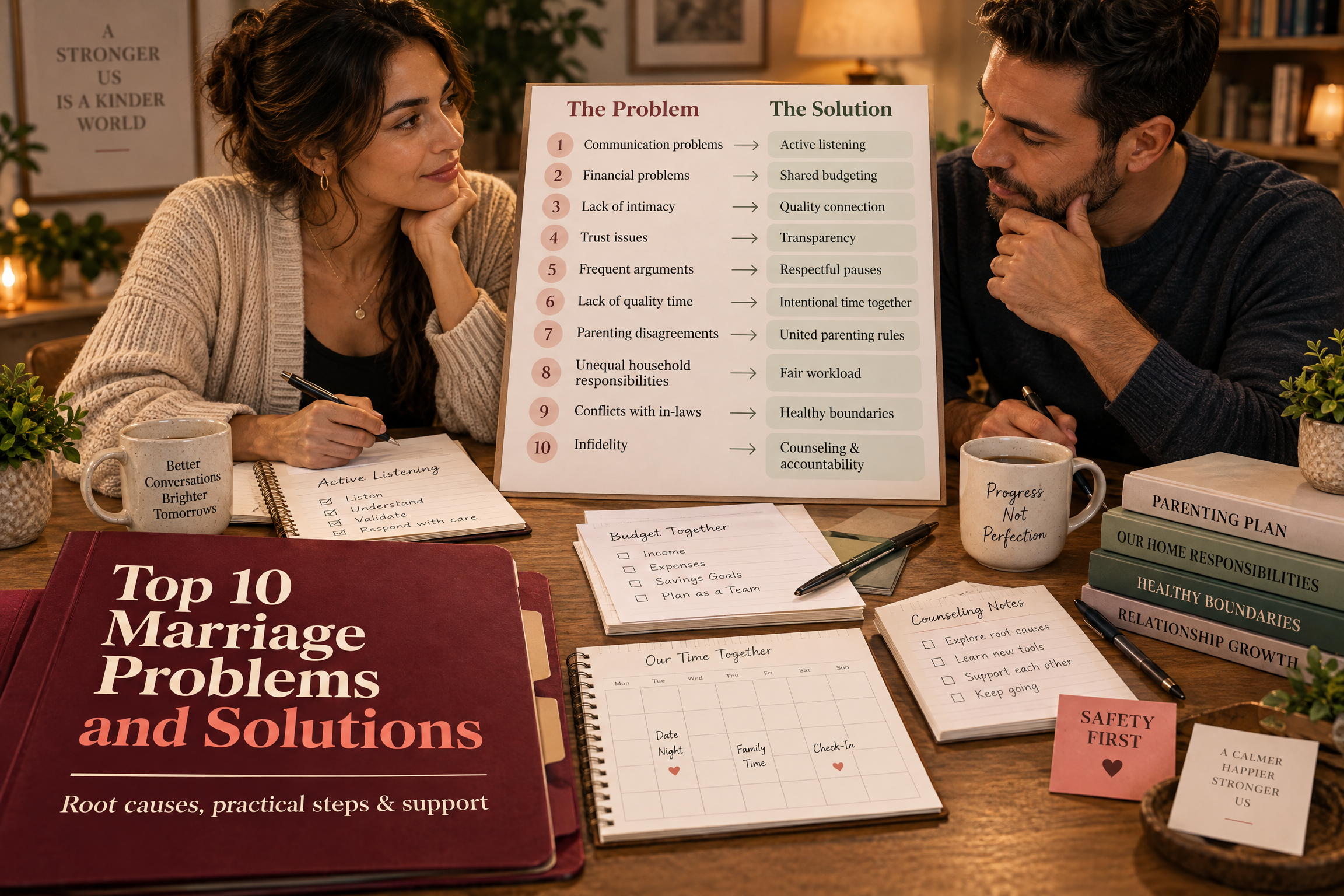
Saving a marriage involves recognizing relationship problems, communicating honestly, rebuilding trust, and making consistent changes. Deciding whether to stay married requires an honest assessment of mutual commitment, emotional well-being, recurring conflicts, and each partner's willingness to repair the relationship. Both spouses need opportunities to express concerns, acknowledge mistakes, and agree on practical steps toward improvement. Marriage counseling offers professional guidance when communication breaks down or recurring problems become difficult to resolve alone.
When a marriage keeps getting worse, identifying the causes of conflict becomes an important first step. Repeated arguments, unresolved resentment, emotional distance, and broken trust require attention rather than temporary promises. Both partners need to demonstrate genuine effort through respectful behavior and measurable changes. Abuse, threats, coercion, or violence require a different priority, with personal safety taking precedence over preserving the marriage. A safe environment and appropriate professional support help clarify the next steps.
1. Stop the Fighting and Hurtful Behavior
Stopping hurtful behavior creates a safer environment for addressing marital problems. Shouting, insults, threats, and deliberate humiliation deepen resentment and weaken emotional security. Both spouses need to pause heated discussions before anger leads to damaging words or actions. Respectful conversations help couples address disagreements without attacking each other's dignity. Couples can agree on clear rules for handling disagreements when arguments become emotionally charged. Taking a short break during heated discussions helps both partners regain composure and return to the conversation respectfully.
2. Communicate Honestly
Honest communication helps spouses understand the problems affecting their marriage. Each partner needs to express feelings, concerns, expectations, and unmet needs without hiding important information. Truthful conversations encourage accountability and reduce misunderstandings. Regular discussions help couples identify problems before resentment grows.
3. Listen Without Interrupting or Defending
Active listening helps spouses understand each other's experiences without immediately arguing or assigning blame. Allowing a partner to finish speaking demonstrates respect and creates space for honest expression. Asking clarifying questions helps prevent misunderstandings. Thoughtful listening encourages constructive conversations focused on understanding rather than winning an argument.
4. Take Responsibility for Your Mistakes
Taking responsibility requires acknowledging harmful behavior and recognizing its effect on the relationship. A sincere apology identifies the mistake without shifting blame or making excuses. Corrective actions demonstrate a genuine commitment to change. Accountability helps rebuild respect and creates a foundation for resolving recurring marital problems.
5. Forgive Past Mistakes Where Possible
Forgiveness helps couples address past hurts without allowing resentment to dominate the marriage. Healing requires time, honest conversations, and a willingness to understand the circumstances surrounding painful experiences. Forgiveness does not require forgetting the past or accepting repeated mistreatment. Rebuilding the relationship requires accountability, emotional readiness, and meaningful changes from both spouses.
6. Rebuild Trust Through Consistent Actions
Rebuilding trust requires honesty, reliability, transparency, and consistent behavior over time. A spouse who has broken trust needs to acknowledge the damage and follow through on agreed changes. The injured partner deserves time and space to process the experience without pressure to forgive quickly. Consistent actions provide stronger evidence of commitment than promises alone.
7. Spend Quality Time Together
Quality time helps spouses reconnect beyond household responsibilities, work demands, and recurring disagreements. Shared meals, walks, hobbies, and planned dates create opportunities for positive interactions. Meaningful conversations help partners rediscover shared interests and understand changing needs. Regular time together supports emotional closeness and reminds couples of the positive aspects of their relationship.
8. Show Affection and Appreciation
Affection and appreciation help restore warmth within a strained marriage. Sincere compliments, thoughtful gestures, kind words, and mutually welcomed physical affection communicate care and respect. Recognizing everyday contributions helps each partner feel valued. Consistent expressions of appreciation encourage positive interactions and strengthen emotional connection.
9. Resolve Financial Issues Together
Financial disagreements create stress when spouses have different spending habits, priorities, or expectations. Honest discussions about income, debt, expenses, savings, and financial goals help identify the sources of tension. A shared budget provides a practical framework for managing responsibilities and planning ahead. Fair financial decisions require transparency, cooperation, and respect for both partners' concerns.
10. Set Healthy Boundaries
Healthy boundaries protect personal dignity, emotional well-being, privacy, and independence within a marriage. Spouses need clear agreements about personal space, friendships, communication, and acceptable behavior during disagreements. Mutual boundaries support closeness without allowing controlling behavior or repeated disrespect. Respecting agreed limits helps create a relationship where both partners feel emotionally secure.
11. Rebuild Emotional and Physical Intimacy
Emotional and physical intimacy can weaken when unresolved conflict, stress, or broken trust creates distance. Honest conversations about affection, comfort, and relationship needs help couples understand the reasons behind the disconnection. Small gestures of warmth and mutually welcomed touch support gradual reconnection. Physical intimacy requires mutual consent, patience, and emotional safety rather than pressure or obligation.
12. Avoid Involving Outsiders Unnecessarily
Protecting marital privacy helps spouses discuss sensitive matters without unnecessary outside interference. Sharing intimate details with friends or relatives who encourage blame can increase tension and complicate reconciliation. Trusted support remains valuable when guidance, perspective, or emotional reassurance is needed. Professional counselors offer a confidential setting for addressing difficult relationship concerns.
13. Focus on Solutions, Not Blame
Solution-focused conversations help couples address the causes of marital conflict instead of repeatedly revisiting accusations. Identifying specific problems makes it easier to agree on practical steps and shared responsibilities. Each spouse needs to recognize personal contributions to recurring disagreements. Collaborative problem-solving encourages accountability and keeps attention on meaningful improvements.
14. Make Specific Changes, Not Promises Alone
Specific changes provide clear evidence of commitment to repairing a marriage. Practical examples include attending counseling, sharing household duties fairly, communicating honestly, and following agreed financial plans. Measurable actions help both partners recognize progress and identify unresolved concerns. Consistency over time demonstrates whether promises reflect a genuine willingness to improve the relationship.
15. Consider Marriage Counseling
Marriage counseling offers professional guidance for couples facing recurring arguments, emotional distance, communication difficulties, or broken trust. A qualified counselor helps spouses identify harmful patterns and develop healthier ways to address disagreements. Counseling provides a structured environment for discussing sensitive concerns and setting realistic goals. Individual counseling offers additional support when personal experiences or emotional difficulties affect the relationship.
16. Be Patient With the Healing Process
Healing takes time when a marriage has experienced prolonged conflict, disappointment, or betrayal. Emotional progress rarely follows a perfectly predictable path, and setbacks require honest discussion rather than immediate discouragement. Both partners benefit from recognizing gradual improvements while maintaining realistic expectations. Patience works best alongside accountability, consistent effort, and clear standards for acceptable behavior.
17. Protect Each Other From Abuse or Violence
Personal safety takes priority over reconciliation when a marriage involves abuse, threats, coercion, or violence. Abuse is not a normal relationship disagreement, and the person experiencing harm is not responsible for the abusive partner's actions. Seeking trusted support, professional guidance, or local emergency assistance helps address immediate risks. Joint counseling is not an appropriate first step when coercion or violence makes honest participation unsafe.
18. Make Sure Both Partners Genuinely Want to Repair the Marriage
Saving a marriage requires genuine willingness from both spouses to address problems and change harmful behavior. One partner's effort cannot replace the other partner's accountability or commitment. Honest discussions help clarify relationship goals, expectations, and readiness to work toward reconciliation. When mutual commitment is absent, individual counseling and careful consideration of personal well-being help determine the next steps.
How Can You Save a Marriage When It Seems Impossible?
Couples can begin repairing their relationship by identifying the problems causing repeated conflict or emotional distance. To save a marriage when it seems impossible, follow these steps. First, discuss concerns honestly and listen to each other's perspectives without insults or blame. Second, agree on specific changes that address the underlying issues, including communication habits, financial disagreements, or broken trust. Third, consider marriage counseling when repeated efforts fail to improve the relationship. Finally, evaluate progress through consistent actions rather than promises alone.
What Are the Main Causes of Marital Breakdown?
Marital breakdown usually develops through recurring problems that weaken trust, communication, emotional connection, and cooperation. Recognizing the main causes helps couples identify the issues requiring attention and choose appropriate steps toward reconciliation.
The main causes of marital breakdown are listed below.
Poor Communication: Frequent misunderstandings and ineffective conversations create distance between partners.
Financial Stress: Disagreements about spending, debt, and financial priorities increase tension.
Lack of Trust: Dishonesty, infidelity, or broken promises weaken relationship security.
Unresolved Conflicts: Repeated arguments without solutions lead to resentment.
Emotional Disconnection: Lack of affection, support, or quality time reduces intimacy and contributes to Common Reasons for Marital Breakdown.
Can Understanding the Root Cause Change the Future of a Marriage?
Yes, understanding the root cause of marital problems helps couples choose solutions that address the actual issues. Identifying poor communication, financial stress, broken trust, or emotional distance provides a clearer starting point for change. Honest discussions and professional guidance help partners recognize harmful patterns and establish practical goals. Lasting improvement depends on mutual commitment, accountability, and consistent behavioral changes rather than insight alone.
How Do You Decide Whether to Stay Married?
Couples need to assess relationship safety, mutual commitment, and the potential for meaningful change when deciding whether to stay married. To make the decision thoughtfully, follow these steps. First, assess whether the relationship remains emotionally and physically safe. Second, consider whether both partners acknowledge the problems and demonstrate genuine willingness to change. Third, evaluate whether communication, trust, and shared responsibilities show meaningful improvement after reasonable efforts. Fourth, seek individual or marriage counseling to clarify concerns and explore realistic options. Lastly, consider personal well-being, family needs, and long-term relationship goals before making a decision. Abuse, coercion, and violence require safety planning rather than pressure to preserve the marriage, helping clarify How Do You Decide Whether to Stay Married.
What Are the Signs That a Marriage Is Worth Saving?
A marriage is worth working on when both partners demonstrate commitment, respect, honesty, and a willingness to address relationship problems. Recognizing positive signs helps couples assess whether reconciliation has a realistic foundation.
The signs that a marriage is worth saving are listed below.
Mutual Commitment: Both partners are willing to work on the marriage and make meaningful changes.
Respect: Each person values the other's feelings, needs, and boundaries.
Open Communication: Both partners discuss difficult issues honestly and listen to opposing perspectives.
Willingness to Change: Each person accepts responsibility and demonstrates consistent improvement.
Emotional Connection: Affection, care, and concern remain despite ongoing challenges.
Can a Marriage Survive Long Term Differences in Values?
Yes, a marriage can survive long-term differences in values when both partners respect each other's beliefs and establish workable compromises. Couples benefit from discussing finances, parenting, religion, and lifestyle expectations before disagreements become persistent sources of conflict. Shared agreements help spouses manage practical decisions without abandoning deeply held personal convictions. Mutual respect and honest communication provide a foundation for maintaining the relationship despite important differences.
How Can You Save Your Marriage During a Separation?
Couples can protect the possibility of reconciliation by establishing clear expectations, honest communication, and shared goals during separation. When trying to save a marriage during separation, follow these steps. First, discuss whether the separation aims to reduce conflict, evaluate the relationship, or prepare for reconciliation. Second, agree on boundaries involving communication, finances, parenting, dating, and living arrangements. Third, establish realistic expectations about contact and the duration of the separation. Fourth, consider individual counseling or marriage counseling when both partners feel safe participating. Finally, review progress together and decide whether reconciliation remains a shared goal.
What Should Couples Consider Before Living Apart?
Couples need to establish clear goals, practical arrangements, and relationship boundaries before living apart. Discussing finances, childcare, household expenses, communication frequency, and the expected duration helps prevent confusion. Both partners benefit from understanding whether the separation is intended to provide temporary space or support a longer-term decision. Written agreements and professional guidance help address complex responsibilities and reduce avoidable disagreements. Couples also need to agree on how shared responsibilities and unexpected expenses will be handled. Regular check-ins help both partners discuss concerns and assess whether the arrangement remains workable. Clear expectations reduce misunderstandings and provide a more stable foundation for deciding the future of the marriage.
Can Temporary Separation Help Spouses Gain Clarity?
Yes, temporary separation can help spouses gain clarity when ongoing conflict makes thoughtful discussion difficult. Time apart provides space to reflect on personal needs, relationship patterns, and the changes required for reconciliation. Clear boundaries and agreed expectations help prevent separation from creating additional confusion. The process works best when both partners use the time constructively and review their progress honestly. Separation does not guarantee reconciliation, and individual safety remains the priority when abuse or coercion is present. Regular conversations help spouses evaluate emotional needs and identify unresolved concerns. A shared review of progress provides a clearer basis for deciding whether to reconcile or pursue separate futures.
How Can You Save Your Marriage After Infidelity?
Couples can begin rebuilding a marriage after infidelity by addressing betrayal honestly, accepting responsibility, and demonstrating consistent changes. To save a marriage after infidelity, follow these steps. First, establish emotional and physical safety before beginning difficult conversations. Second, answer questions about the betrayal honestly without minimizing the harm or shifting blame. Third, agree on boundaries and practical steps that support transparency and rebuild trust. Fourth, allow time to process grief, anger, and uncertainty without pressuring the injured partner to forgive quickly. Finally, consider professional counseling to address recurring conflict and assess whether both partners remain committed to rebuilding the relationship, including the complex connection between Love and Infidelity.
What Challenges Do Couples Face After an Affair?
Couples experience emotional and relationship challenges after infidelity that make reconciliation difficult. Betrayal affects trust, emotional security, communication, and intimacy. Healing requires honesty, patience, and a willingness to address the harm caused by the affair.
The challenges couples face after an affair are listed below.
Broken Trust: The betrayed partner struggles to feel secure or believe promises. Consistent honesty and reliable actions help rebuild confidence over time.
Emotional Distress: Anger, sadness, anxiety, and grief affect daily life. Emotional support and space to process painful feelings help partners manage the impact of betrayal.
Communication Problems: Difficult conversations lead to arguments, defensiveness, or withdrawal. Calm discussions and active listening help couples express concerns and understand each other's perspectives.
Intimacy Issues: Emotional and physical closeness become difficult to restore. Respecting personal boundaries and rebuilding emotional connection gradually help partners regain comfort.
Fear of Repeated Betrayal: Uncertainty about future faithfulness delays healing. Transparency, accountability, and consistent behavior help address fears and establish a stronger foundation for trust.
Can a Marriage Become Stronger After Infidelity?
Yes, a marriage can become stronger after infidelity, but reconciliation is not guaranteed. Both partners need to address the betrayal, establish healthy boundaries, improve communication, and rebuild trust through consistent actions. Time, accountability, and professional support help some couples develop healthier relationship patterns. Success depends on both partners' willingness to make lasting changes and address the harm caused by infidelity. Honest conversations help couples understand unmet needs and recognize harmful relationship patterns. Rebuilding emotional security takes patience, mutual effort, and respect for the betrayed partner's healing process.
How Can You Handle Different Needs in a Marriage?
Couples can manage different needs in a marriage by discussing personal priorities, respecting individual boundaries, and finding practical compromises. To handle different needs in a marriage, follow these steps. First, identify the emotional, physical, social, and personal needs that matter to each partner. Second, explain unmet needs calmly and describe their impact on the relationship. Third, listen to each other's concerns without dismissing or criticizing individual preferences. Fourth, agree on realistic changes that respect both partners' priorities. Lastly, review progress regularly and seek professional guidance when disagreements remain unresolved.
What Should You Do When Your Spouse Feels Unhappy or Unfulfilled?
Partners can address marital unhappiness by understanding the underlying concerns and working together toward meaningful changes. First, invite an honest conversation about the reasons behind the unhappiness. Second, listen carefully without becoming defensive or dismissing personal concerns. Third, discuss unmet needs involving affection, communication, household responsibilities, intimacy, or personal goals. Fourth, agree on specific actions that address the concerns and establish realistic expectations. Lastly, review the changes together and consider marriage counseling when progress remains difficult.
Can Differences in Personal Needs Be Resolved Without Ending the Marriage?
Yes, differences in personal needs can be resolved without ending a marriage when both partners commit to honest communication and compromise. Discussing individual priorities, establishing healthy boundaries, and identifying practical solutions help couples respect each other's needs. Mutual understanding and consistent effort support relationship stability despite personal differences. Persistent incompatibility or harmful behavior requires professional guidance and careful consideration of the relationship's future. Regular check-ins help couples assess whether agreed changes meet both partners' needs. Respecting individual differences creates room for personal growth and a more balanced relationship.
How Can You Make Your Marriage Work Through Major Life Changes?
Couples can strengthen their marriage during major life changes by communicating openly, adjusting expectations, and supporting each other's needs. To make a marriage work through major life changes, follow these steps. First, discuss how upcoming changes affect family responsibilities, finances, careers, and personal priorities. Second, divide responsibilities fairly and adjust arrangements when circumstances change. Third, maintain regular conversations about emotional needs and relationship concerns. Fourth, establish shared goals that reflect both partners' priorities. Lastly, make time for affection and connection despite changing routines.
How Can Couples Adapt to Parenting, Career Changes, or Empty Nest Life?
Couples can adapt to parenting, career changes, or empty nest life by recognizing new responsibilities and adjusting their relationship routines. First, discuss the emotional and practical challenges associated with the transition. Second, establish realistic expectations about household duties, childcare, finances, and personal time. Third, support each other's career ambitions and individual interests. Fourth, schedule meaningful time together to maintain emotional closeness. Lastly, review changing needs regularly and agree on adjustments that support both partners.
Can Shared Goals Help Couples Navigate Major Life Transitions?
Yes, shared goals help couples navigate major life transitions by providing a common direction. Agreeing on priorities involving finances, family responsibilities, career plans, and personal well-being helps partners coordinate decisions. Working toward common goals reduces conflict, strengthens teamwork, and supports adaptation during periods of change. Regular discussions help couples revise their plans when circumstances or priorities shift. Mutual support and flexibility help preserve emotional connection during uncertain periods. Celebrating progress reinforces a sense of partnership and shared purpose. Respecting individual aspirations alongside shared priorities helps both partners feel valued during major changes.
What Should You Do If Your Marriage Keeps Getting Worse?
Couples can address a deteriorating marriage by identifying recurring problems, communicating concerns clearly, and assessing each partner's willingness to change. To address a marriage that keeps getting worse, follow these steps. First, identify recurring conflicts, unmet needs, and behaviors that damage trust. Second, discuss concerns calmly and explain the changes required to improve the relationship. Third, establish healthy boundaries and address harmful behavior directly. Fourth, consider professional marriage counseling when communication remains difficult, and participation feels safe. Lastly, evaluate whether both partners demonstrate consistent improvement. When the relationship continues to harm emotional well-being despite genuine efforts, consider whether separation offers a healthier path.
When Is It Time to Consider Alternatives to Reconciliation?
It is time to consider alternatives to reconciliation when repeated attempts to repair the marriage fail or the relationship remains harmful. Persistent abuse, ongoing betrayal, disregard for boundaries, or unwillingness to change indicate that reconciliation might not be realistic. Assessing emotional well-being, personal safety, and long-term needs helps clarify whether separation or divorce is appropriate. Professional counseling and trusted support help individuals evaluate their options. Immediate safety takes priority when threats, coercion, or violence occur. Documenting recurring concerns helps clarify patterns that affect the relationship. Honest reflection on personal needs and future expectations supports informed decisions about the next steps.
Can Ending a Marriage Be the Healthiest Choice for Both Partners?
Yes, ending a marriage can be the healthiest choice when the relationship consistently harms one or both partners and cannot be repaired. Ongoing abuse, persistent conflict, or fundamental incompatibility can make separation healthier than remaining together. A respectful separation provides space to protect personal well-being and pursue healthier futures. Counseling offers emotional support, and legal guidance helps address practical responsibilities. Safety, financial stability, and the needs of children require careful consideration during the process. Honest discussions help partners establish boundaries and manage shared responsibilities during separation. Prioritizing emotional health and personal safety provides a stronger foundation for life after the marriage.